
Reading the Grain

· 14 min read
An introduction to the woods used in furniture: how the species differ, which attributes actually determine the durability and quality of a piece, and why some timbers cost a hundred times more than others.
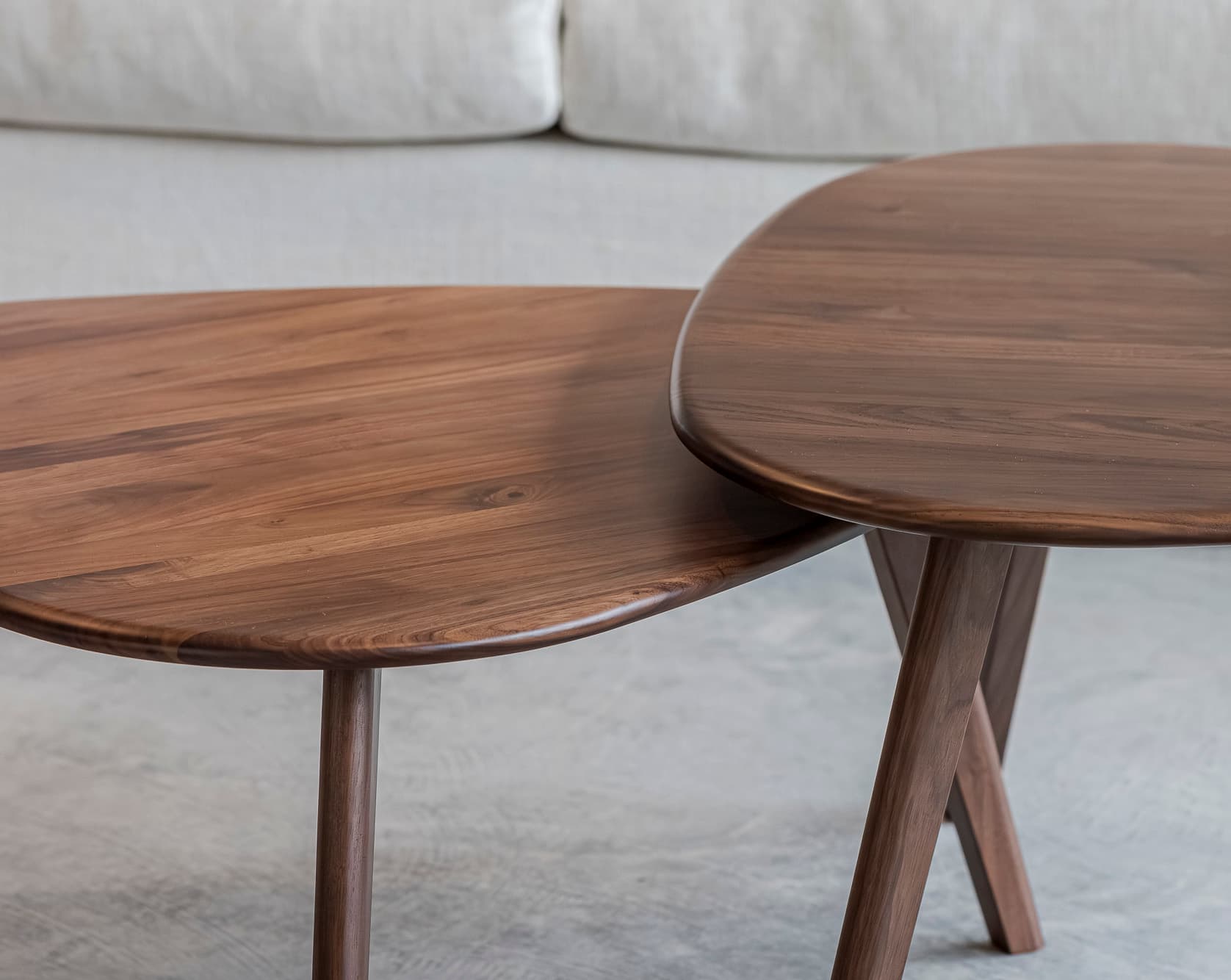
Stand in front of two dining tables. Same silhouette, same four legs, same honest rectangle of timber. One is priced like a weekend purchase. The other is priced like a car. Nothing visible explains the gap.
The explanation is there, but it is written at a scale of decades: in how long the tree stood before it was cut, in how the log was opened, and in whether what you are touching is wood at all or a very thin layer of it. Here is how to read it.
Hardwood does not mean hard
Almost everyone gets this wrong, including a fair number of people selling furniture.
Hardwood and softwood are botanical categories, as fixed and as unrelated to texture as the difference between a mammal and a bird.
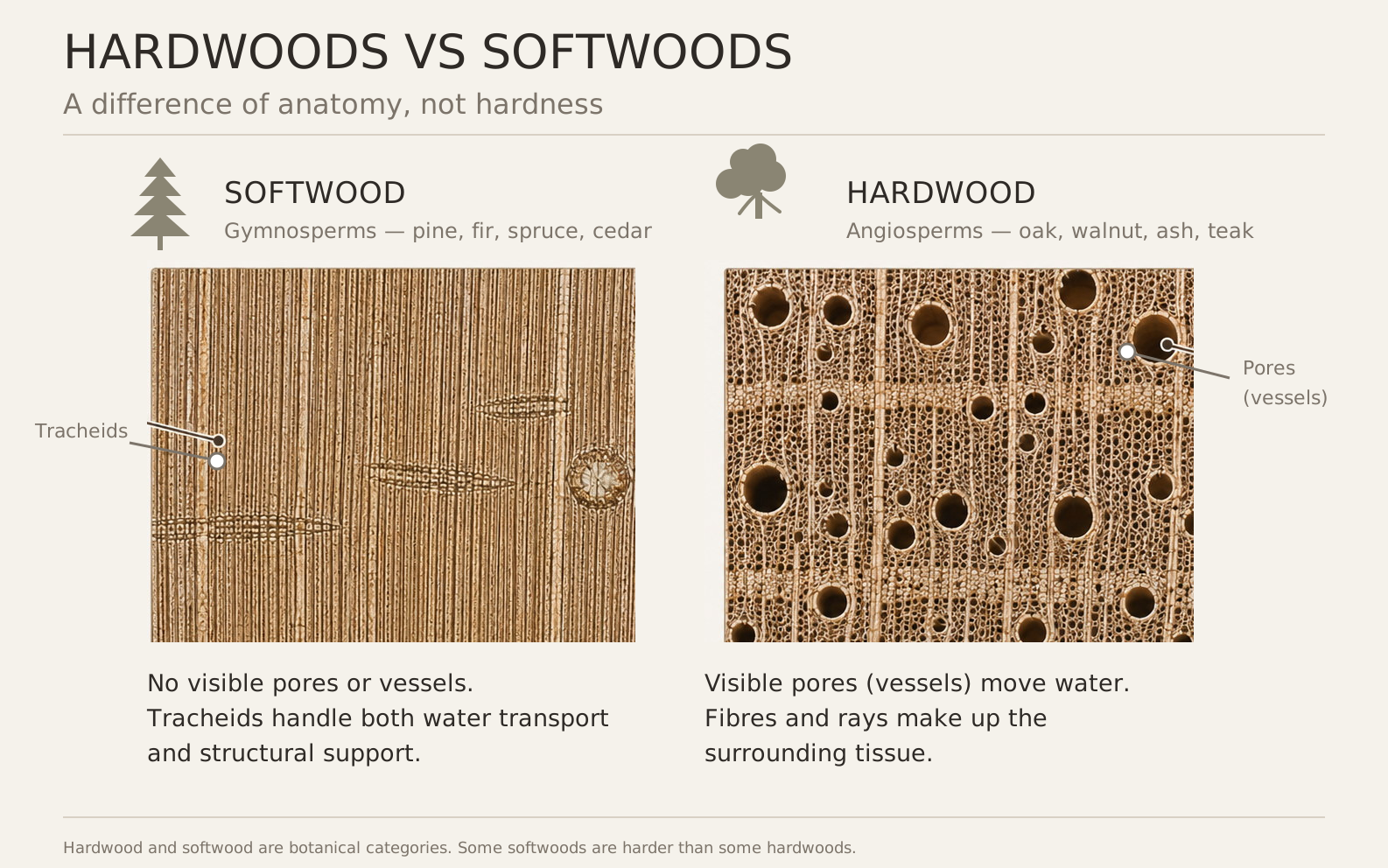
Softwoods are conifers: cone-bearing, needled, structurally simple. Their wood is built almost entirely from one cell type, called tracheids, which move water and carry load at the same time.
Hardwoods are flowering, broad-leaved trees. Their wood divides the labour: dedicated vessels move water, separate fibre cells provide strength. Those vessels are the pores you can see on the end grain of an oak board, and they are why hardwood grain has character that pine does not.
This matters commercially. Acacia, eucalyptus, and rubberwood are all botanically hardwoods. A flat-pack table made from eight-year-old plantation acacia can be sold as "solid hardwood" with complete technical accuracy, and it will still dent when you drop a glass on it.
Density, and the number underneath it
If you want one figure that predicts behaviour, use density: kilograms per cubic metre at roughly 12 percent moisture content. Denser wood resists denting, holds a crisp edge, takes a polish, and carries load on slimmer sections.
The trade also uses the Janka test, devised in 1906, which measures the force needed to press an 11.28mm steel ball halfway into the surface. It answers one question: will this dent. It says nothing about whether a shelf will sag or a panel will stay flat.
| Species | Class | Density (kg/m³) | Janka (lbf) | Years to harvest |
|---|---|---|---|---|
| Balsa | Hardwood | 160 | 90 | 4 to 6 |
| Eastern white pine | Softwood | 370 | 380 | 25 to 35 |
| Acacia, 7 year plantation | Hardwood | 480 to 520 | ~800 | 7 to 12 |
| Genuine mahogany | Hardwood | 590 | 900 | 60 to 100 |
| Rubberwood | Hardwood | 595 to 650 | 960 | 25 to 30 |
| Black walnut | Hardwood | 610 | 1,010 | 50 to 80 |
| Teak | Hardwood | 655 | 1,070 | 20 to 25 (plantation) |
| Yew | Softwood | 670 | 1,600 | 60 to 100 |
| White ash | Hardwood | 675 | 1,320 | 60 to 80 |
| Red oak | Hardwood | 700 | 1,220 | 60 to 80 |
| White oak | Hardwood | 755 | 1,350 | 80 to 120 |
| Acacia, mature | Hardwood | 585 | 1,430 | 25 or more |
| East Indian rosewood | Hardwood | 830 | 2,440 | 60 to 100 |
| Cocobolo | Hardwood | 1,095 | 2,960 | 70 to 120 |
The comfortable zone for furniture sits roughly between 600 and 850. Below it, wood dents and joints loosen. Above it, the material is hard to machine, hard to glue, and expensive enough to migrate into small objects: knife handles, fretboards, inlay.
Two things in that table are worth pausing on. Balsa and yew sit at opposite ends and prove the point above: the hardwood is the softest thing on the list, and the softwood outranks walnut, teak, and both oaks for hardness. And acacia appears twice, which is not an error. It is the most important line in the table.
Three things that matter more than the density table
The density table describes a species as an average. Furniture is made from a particular tree, at a particular age, of a particular shape. Three things routinely overturn what the table predicts.
Age
A tree gets denser as it grows. Plantation acacia gains roughly a third of its density after the age at which the industry cuts it down.
The first ten to fifteen years also produce what is called juvenile wood, formed near the centre of the trunk. Juvenile wood does not just shrink as it dries, it twists. That is the real reason cheap furniture arrives as narrow strips glued edge to edge: young logs are too small for wide boards, and the wood would not stay flat even if they weren't. The lamination is not a cost-cutting trick, it is the only way to keep the material still.
The reverse explains a surprise. Rubberwood is felled at twenty-five to thirty years, once the tree stops producing latex, so it arrives as mature wood at 595 to 650 kg/m³. That is denser than walnut, and it is why a rubberwood table feels so much more solid than an acacia one at the same price.
Movement
All wood swells and shrinks with humidity. The number to ask for is volumetric shrinkage.
| Species | Volumetric shrinkage |
|---|---|
| Teak | 7.2% |
| Rubberwood | 7.5% |
| Genuine mahogany | 7.8% |
| Black walnut | 12.8% |
| White ash | 13.3% |
| White oak | 16.3% |
Read that table carefully, because the obvious conclusion is the wrong one. White oak moves more than anything else on the list, and oak furniture is famous for lasting centuries. Movement is not a defect to be avoided. It is a force to be allowed for.
That allowance is joinery. A well-made solid table top is held by fasteners that grip firmly but can slide as the wood expands: metal bars or battens across the underside, slotted screw holes, buttons or clips rather than glue along the whole width. Traditional joints do the same thing by design, which is why mortise-and-tenon frames outlive screwed butt joints. Glue matters too: a modern PVA or polyurethane glue line is stronger than the wood around it, but only where the joint was cut tight and clamped properly in the first place.
For most rooms, and especially in the tropics, solid hardwood is the best thing you can buy. Choose a piece with metal support bars underneath that let the top move, and you get furniture that lasts generations, can be sanded flat, repaired, and refinished as many times as you like. Veneer can be excellent too, but only over a plywood core. If the core is foam, particleboard, or MDF, humidity will eventually swell it and nothing about that is repairable.
The shape of the log
A species can be perfectly good and still produce bad boards, because a log is not a tidy rectangle.
Eucalyptus is the clearest example. It grows fast and under enormous internal tension, so when the log is opened the boards bend as they come off the saw and the ends split. It dries badly too. Most eucalyptus goes to pulp and panels, and furniture gets what is left. It is also why cheap eucalyptus garden furniture rots so quickly: fast-grown plantation trees are mostly sapwood, which has no natural resistance to decay in any species.
Straightness, trunk diameter, and freedom from internal tension matter as much as density, and none of them appear on a label.
Solid wood or veneer
Veneer is a thin slice of real wood, typically 0.3 to 0.6mm, glued onto a manufactured core. It is not fake, and it is not new. The best logs in the world are sold as veneer logs precisely because slicing them thinly lets one exceptional tree cover hundreds of square metres instead of a few tabletops.
A solid top is the better object. It can be sanded flat and refinished as many times as you like, so scratches, rings, and burns are all repairable rather than permanent. Damage to an edge or a corner is repairable too. It swells and shrinks with the seasons, but that movement is reversible: the wood comes back. And it can be rebuilt. A solid table can be taken apart, rejointed, and put back together decades later, which is why antique furniture still exists.
A veneered top carries risks that cannot be undone. The surface is thinner than a sheet of card, so a deep scratch goes through it into the core and no amount of sanding brings it back. Edges and corners are the weak point, and once one chips it stays chipped. If water gets past the finish at an unsealed edge, the veneer lifts and the edge banding peels. None of this is repairable in any real sense: you are not refinishing a veneered table, you are replacing it.
If you do buy veneer, make sure the core is made from a good material. Plywood is stable, holds a screw, and survives humidity. MDF, particleboard, and foam do not: they soak up water at any unsealed edge and swell permanently, and once that happens the panel is finished. In a tropical climate that takes a few seasons, not decades.
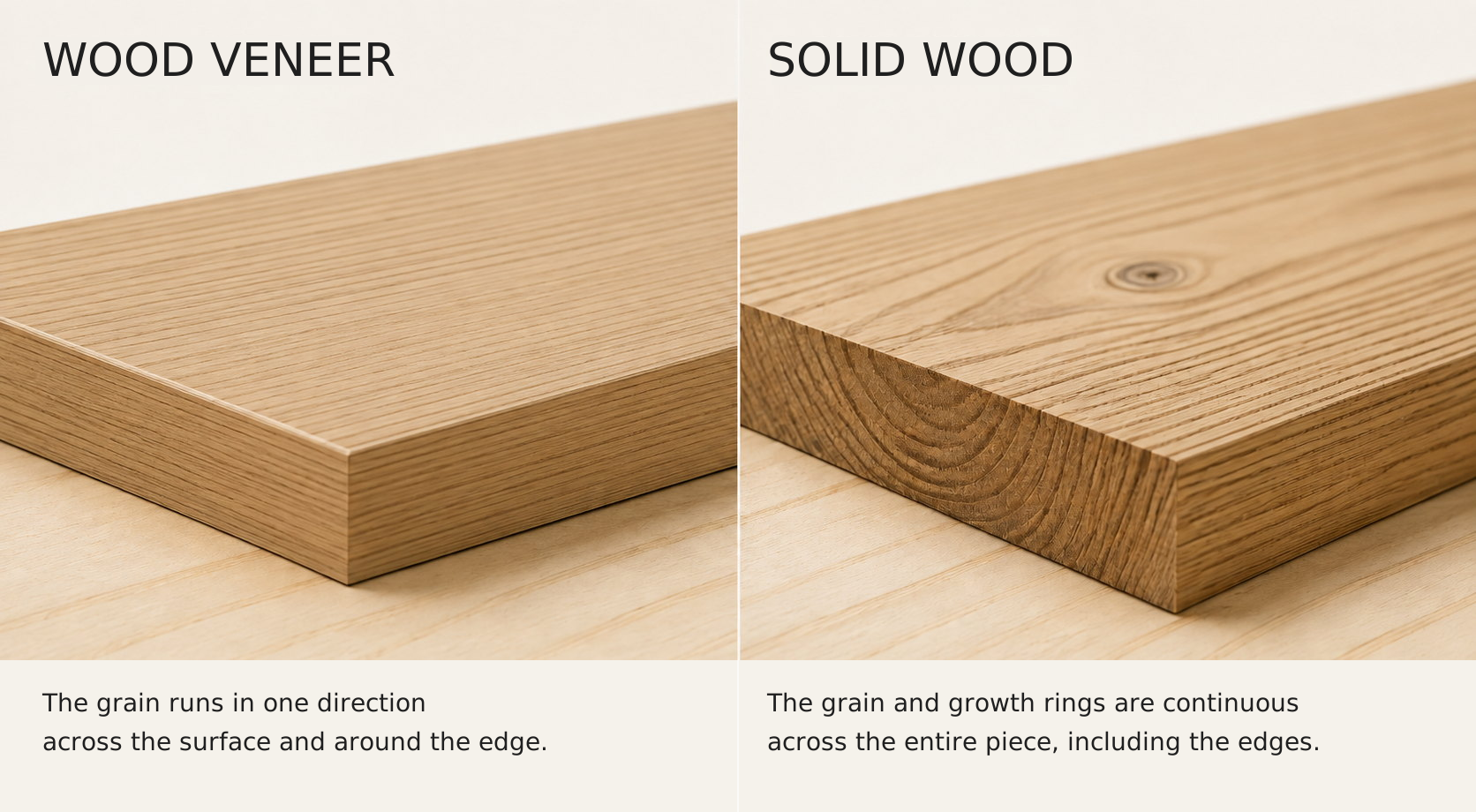
How to tell in ten seconds. Look at the edge: on solid wood the face grain wraps around and continues on the edge, while on veneer the edge is a separate strip whose grain runs one uniform direction and does not match the top. Look underneath: solid tops show the same grain on both faces. Look for repeats, because identical figure appearing twice across a wide top means one sliced sheet, not one tree. And tap it. Solid wood gives a bright knock that changes pitch across the surface, while a veneered panel over a light core returns a dull, dead sound, absorbed rather than reflected.
The cut
Two boards from the same log can differ threefold in price depending only on how the log was opened. All three cuts produce ordinary flat planks. What changes is the angle at which the growth rings pass through the board, and that angle decides both yield and stability.
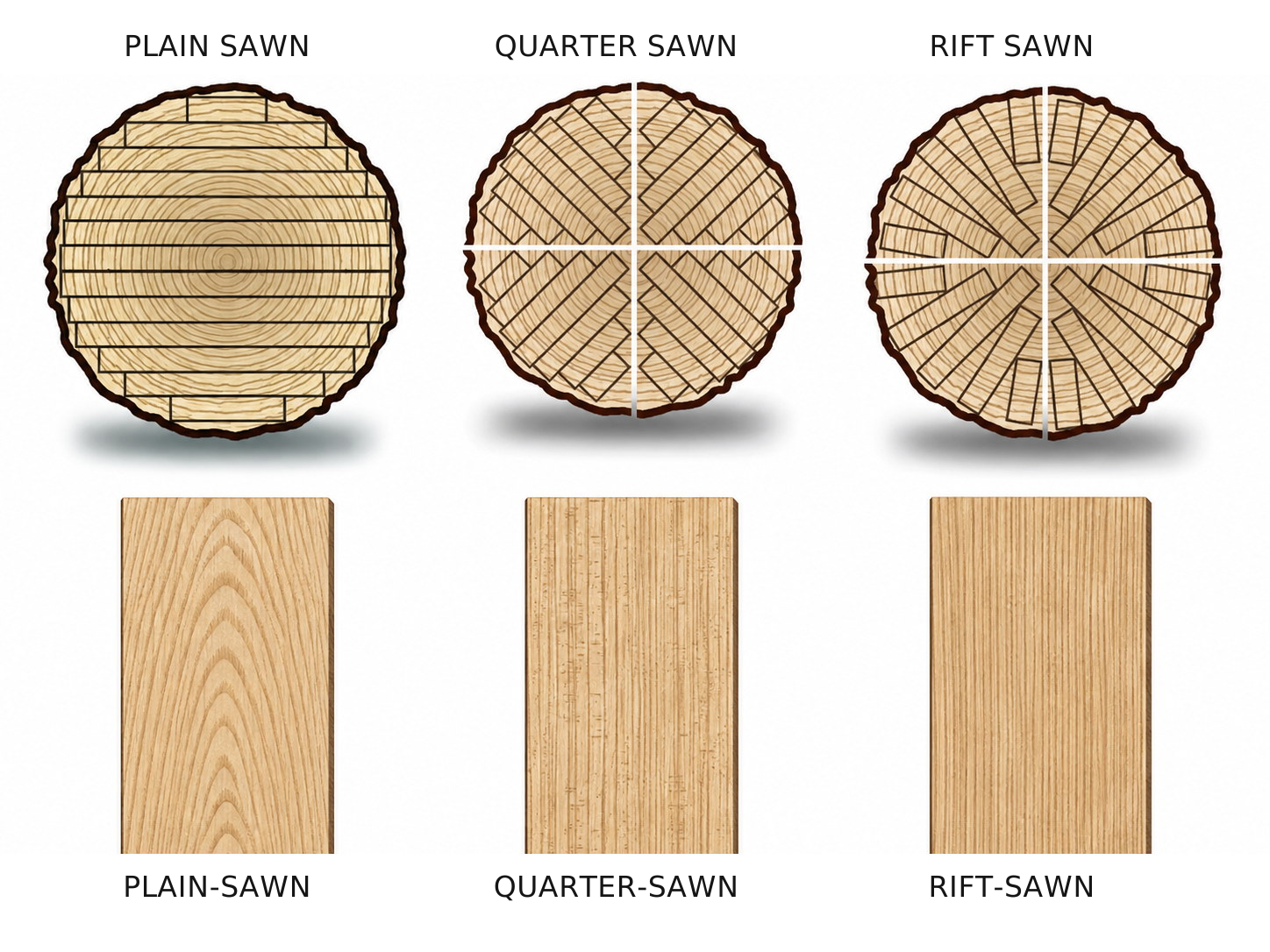
Quarter sawn gives a much lower yield and costs more. The grain runs straight, and in oak the medullary rays surface as silvery flecks, which is a quieter kind of beauty than cathedral figure but a real one. It moves about half as much as flat sawn.
Rift sawn gives the lowest yield of all and is the most expensive. It produces near-perfect straight grain with no fleck and is the most stable and hardest-wearing of the three, which is why it is chosen for legs and frames where four faces must match.
The rule underneath all of it: the more spectacular the grain, the less stable the board, and the cheaper it was to produce.
Figure, and why deformity is expensive
The cut decides what pattern the rings make. Figure is something else: a deformity in how the tree grew the wood in the first place.
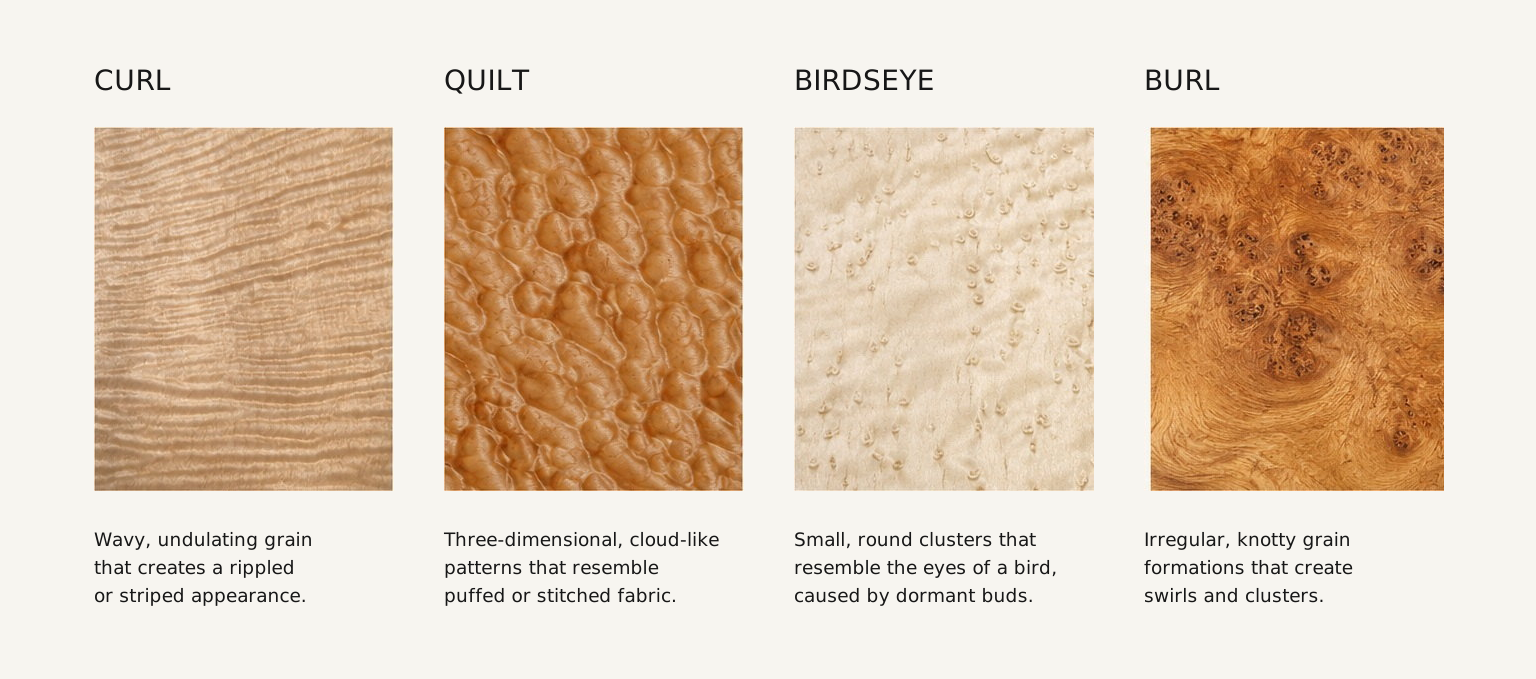
Curl, quilt, birdseye, and burl are all anomalies. The fibres stop running straight and instead wave, pucker, dimple, or knot into a mass, and light striking that uneven surface reflects at shifting angles, which is why curly wood appears to move as you walk past it. The causes are only partly understood: curl in maple looks inherited, burl is usually a response to injury or infection, and birdseye nobody has satisfactorily explained.
What matters commercially is that figure cannot be cultivated. You cannot plant it, breed for it reliably, or see it from outside the tree. It is found, not made, often only once the log is open on the saw.
Species also differ enormously in how often they produce it. Maple throws curl often enough to have a standing market for it. In mahogany it is extraordinarily rare, so a curly mahogany board is a remarkable object rather than a premium grade. That scarcity is the price: a figured walnut slab can cost four times a plain one from the same forest, and the rarer the figure, the steeper the multiple.
Colour behaves differently again. Walnut arrives brown and needs no stain, which is much of its price. Cherry arrives pink and darkens to amber over its first year in light, so the piece you receive is not the piece you keep. Teak and the true rosewoods carry natural oils that give them a depth under finish no stain reproduces.
Availability, which decides everything else
The third factor is the one designers underestimate: can you get it again? Specifying a wood you found once is a good way to fail a client. Colour has to match across a set, and a collection has to be repeatable next season.
Regulation now draws much of that line. The whole rosewood genus Dalbergia, which includes cocobolo and kingwood, needs export permits under CITES, and Brazilian rosewood has been closed to commercial trade since 1992. Genuine mahogany has been restricted since 2003. Teak is unrestricted, but Myanmar teak, the old-growth benchmark, is caught up in sanctions in Europe and the United States.
This is why serious sourcing runs on plantations and certification. An FSC or PEFC certificate is not a marketing badge, it is the paperwork that lets a species be bought and shipped legally at all, and without it a wood simply cannot be specified for production. Plantation teak from Panama, Costa Rica, and Indonesia now supplies most of the legitimate market. It is paler and less oily than sixty-year-old Burmese stock, but it can be ordered again next year, which is what matters.
A short history of taste
Furniture changes its favourite wood roughly once a century, and each shift follows a change in tools, trade, or supply. Oak ruled medieval Europe because it could be split radially into stable panels centuries before reliable sawmills. Walnut displaced it around 1660, finer in texture and suited to veneer and carving. Mahogany arrived in the eighteenth century in wide, clear, stable boards and made the slender Georgian forms of Chippendale physically possible. Rosewood defined the nineteenth century in Europe, though Ming dynasty cabinetmakers had been building with huanghuali since the sixteenth. Beech deserves a footnote of its own: unremarkable to look at, superb under steam, and used by Thonet in 1859 for Chair No. 14, of which some fifty million were made before the First World War. Teak closed the cycle as the signature of Danish modern.
What things cost
Indicative only, in US dollars per board foot. Prices vary widely by region, grade, and thickness, and what a factory pays at source can differ from retail.
| Species | Per board foot |
|---|---|
| Pine | $2 to $5 |
| Acacia, plantation | $3 to $6 |
| Eucalyptus | $3 to $8 |
| Rubberwood | $5 to $10 |
| Red oak | $4 to $7 |
| White ash | $4 to $8 |
| White oak | $8 to $15 |
| Quarter-sawn white oak | $12 to $20 |
| Teak, plantation | $12 to $25 |
| Black walnut | $10 to $18 |
| Genuine mahogany | $18 to $35 |
| Cocobolo | $60 to $150 |
Two of these surprise people. Rubberwood costs more than acacia, not less, because it is harvested at twenty-five years rather than seven and every board has to be preservative-treated and kiln dried before it can be used at all. And plantation teak is cheaper than mahogany or walnut, because teak is farmed deliberately at scale while genuine mahogany is CITES-restricted and increasingly hard to source.
At the far end, cocobolo costs more than thirty times what acacia does. It is twice as dense, takes ten times as long to grow, arrives in far smaller logs, and needs an export permit. Every part of that ratio is legible.
Five questions worth asking
Is it solid, or veneered? This is the first question, because it changes everything after it. Check the edge, the underside, and the sound. If it is veneered, ask what the core is: plywood is fine, foam and particleboard are not.
How is it put together? Was it dried properly, and is it built to move? Look underneath a solid top for metal support bars with slotted holes, or wooden buttons, anything that grips the top while letting it expand. Look at the joints: mortise-and-tenon, dowels, and dovetails outlive screws driven straight into end grain. A table that cannot move will eventually split itself.
What is it actually called? Ask for the botanical name. "Acacia" alone covers more than nine hundred species ranging from softer than oak to nearly three times as hard. "Mahogany," "rosewood," and "cedar" are trade categories too.
How old was the tree? Ring spacing on the end grain tells you. Tight, even rings mean slow growth and stable wood. Wide rings mean speed, and speed means movement.
Can you get it again in two years? If not, it is a one-off and should be priced as one.
And one thing not to do: do not judge by weight. Lifting a corner tells you about moisture content, section thickness, and what is inside the panel. It tells you very little about the species.
The price difference between two wooden tables is not arbitrary, and it is mostly not brand. It is time, stability, and the unglamorous certainty of supply. A table made from a century-old oak is expensive because a century happened first.
Updated September 4, 2026
About the author
I'm Gabriel, cofounder of Mansa Furniture. I studied industrial engineering, built a career as a software engineer, and have liked woodworking since I was a teenager. I didn't realize all three had something in common, my real passion: functional design, building things that help people do things easier and live better. I bring an engineer's habits to furniture, paying close attention to materials and processes, always asking what actually adds value to a piece of furniture.
Frequently asked questions
Is hardwood always harder than softwood?
No. Hardwood and softwood are botanical categories, not measures of hardness. Hardwoods come from flowering, broad-leaved trees and softwoods from conifers. Balsa is one of the softest woods in the world and is botanically a hardwood, while yew is a softwood harder than walnut, teak, or oak.
Is rubberwood good quality?
Yes, and it is consistently underestimated. Rubberwood is harvested at twenty-five to thirty years, once the tree stops producing latex, so it arrives as mature wood at 595 to 650 kg/m³, denser than walnut or mahogany. It is also very dimensionally stable. Its weaknesses are a plain grain and no natural rot resistance.
Is acacia good wood for furniture?
Acacia itself is good. The problem is age. Most furniture acacia is cut at seven to twelve years, before the tree has gained roughly a third of its final density, so it arrives soft, unstable, and glued up from narrow strips. Mature acacia is harder than white oak. Almost nobody sells it.
Is solid wood better than veneer?
For most buyers, yes. A solid top can be sanded, repaired, refinished, and even taken apart and rebuilt decades later. A veneer is thinner than a sheet of card, so a deep scratch reaches the core and cannot be sanded out. Veneer over plywood is still a legitimate, well-built object.
How can I tell if a table is solid wood or veneer?
Check the edge: on solid wood the grain wraps around and continues onto the edge, while veneer has a separate edge strip that does not match the top. Look underneath for the same grain on both faces. Then tap it. Solid wood knocks brightly; a veneered panel sounds dull and absorbed.
Which wood is best for humid or tropical climates?
Solid hardwood, chosen with construction in mind. Teak, Mahogany, and Rubberwood move least with humidity, but movement itself is not the deciding factor. White oak moves more than any of them and lasts for centuries, because good joinery lets the wood expand instead of fighting it.
Why is walnut so expensive?
Time and color. Black walnut takes fifty to eighty years to reach furniture size, and it arrives naturally brown, so it needs no stain to look the way people want it to look. Add strong export demand and a low yield of clear, wide boards, and the price follows.
Comments (0)
No comments yet. Be the first to write one.


