
Reading the Yarn

· 15 min read
Why one upholstery fabric costs $2 a meter and another more than a thousand. A guide to the textiles furniture is actually covered in: what fibers are made of, how yarn and cloth are constructed, what velvet, bouclé and chenille really are, and what to ask before you buy.
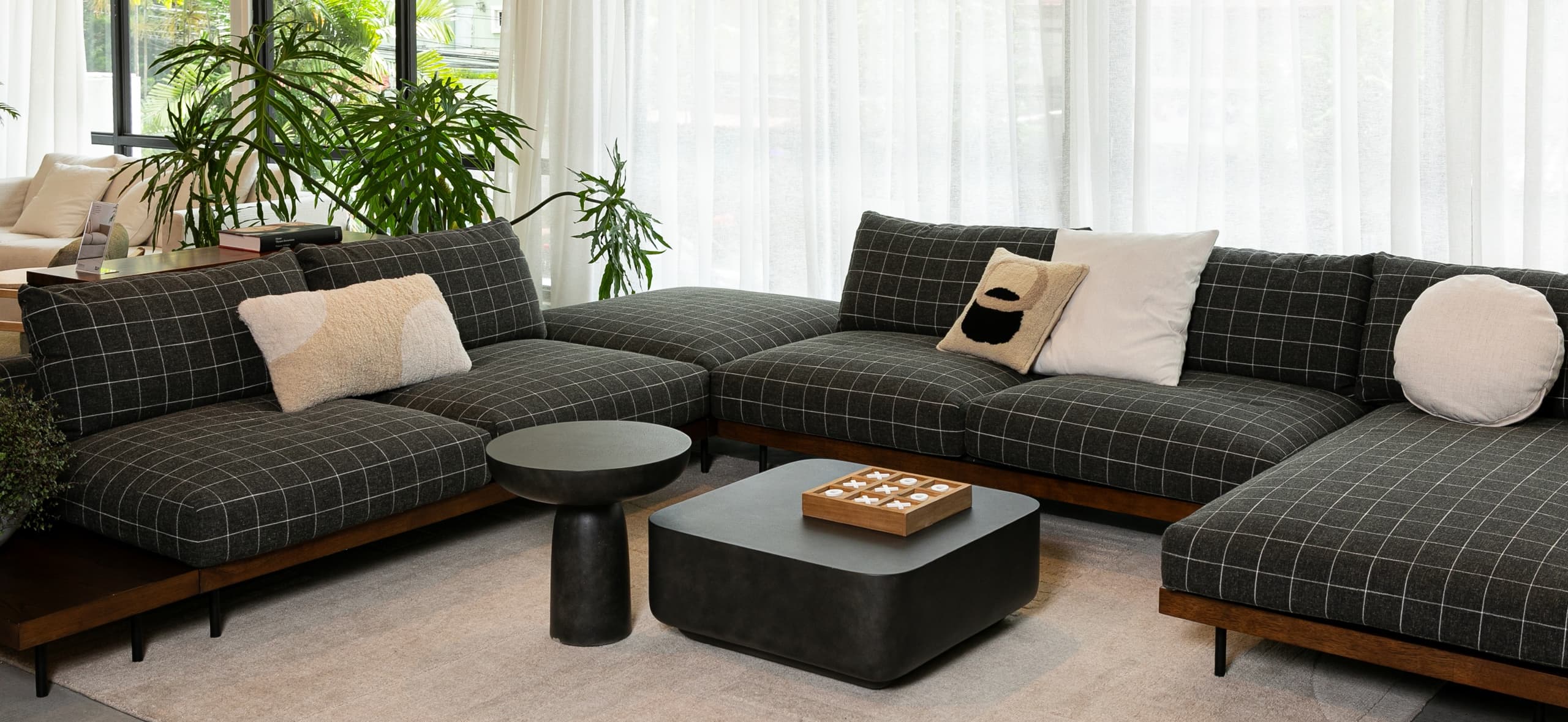
Two sofas can share the same frame, the same foam, the same maker, and arrive at prices that differ by thousands of dollars. The difference is sitting on the surface. Upholstery fabric can run from two dollars a meter to more than a thousand, and unlike wood, where the price is at least partly visible in the grain, fabric hides its cost structure well. A photograph cannot tell you whether a velvet is silk or polyester.
The good news is that fabric is not mysterious; it is the result of three decisions: the fiber it starts from, the yarn that fiber becomes, and the construction that turns yarn into cloth. Read those three and you can start getting an idea of the price. For everything the hand cannot verify, there is the spec sheet: a short set of standardized measurements, from rub cycles to lightfastness grades, that reads like a fabric's medical record. By the end of this article you will be able to interpret one.
First decision: the fiber
Fibers divide into three families: natural fibers are grown, regenerated fibers like viscose start as natural cellulose dissolved and re-spun by machine, and synthetics are extruded from petroleum.
Among the naturals, linen is the aristocrat, and its price begins with scarcity: flax thrives only in a narrow coastal band through Normandy, Belgium and the Netherlands, and is laborious to extract from the stalk. The yarn it gives is strong, cool to the touch and naturally slubbed, wrinkling and softening as it ages. Hemp is its rustic cousin, a bast fiber like flax but coarser and even tougher, and far less fussy about geography: it grows in climates and regions flax will not. Cotton is the workhorse, softer, easier to dye and grown at vast scale, though quick to fade and abrade unless blended. Wool is the quiet overachiever, its crimp springing back from crushing, its lanolin shedding stains, its chemistry resisting flame, which is why it dominates aviation and contract seating. Mohair makes one of the most durable velvets ever woven, the reason old theaters chose it, and its price is scarcity again: the Angora goat is far rarer than the sheep and yields far less fiber. Silk remains the most beautiful and least practical: glorious on an occasional chair, a short sad story on a daily sofa.
Viscose (rayon) is the hybrid: natural wood cellulose dissolved and re-spun by machine. It is remarkably soft under the hand and lends fabrics the luster and depth of color of silk at a fraction of the price, which is why so many chenilles and velvets carry it. Its weakness is moisture, losing strength when wet and marking easily with water: a beauty fiber, added for what it does to light and touch, not for endurance.
The synthetics are extruded, not grown, and polyester is the reason inexpensive furniture exists: continuous filament produced at industrial scale, strong, stable, colorfast, and the backbone of most performance fabrics. What it lacks is the hand, the temperature and the aging of natural fiber. Polyester develops no patina; it holds its year-one face until pilling, crushed pile or a tired sheen catches up with it, and then it simply looks worn rather than lived-in. Its siblings play supporting roles: solution-dyed acrylic is nearly fade-proof and rules outdoor fabric, nylon hardens blends against abrasion, and polypropylene shrugs off stains because it absorbs almost nothing.
Most upholstery is a blend, and blending is engineering, not adulteration: linen-cotton tames linen's wrinkle and cost, a quarter of polyester behind a natural face can double an abrasion score, viscose brings the light, nylon brings the armor. The question is never whether a fabric is blended, but what each fiber is doing.
| Fiber | Pros | Cons | Price tier |
|---|---|---|---|
| Linen | Cool, crisp, ages beautifully | Wrinkles, moderate abrasion | High |
| Hemp | Very strong, durable, grows almost anywhere | Coarse hand, limited range | Mid |
| Cotton | Soft, matte, takes color well | Fades and abrades alone | Low to mid |
| Wool | Resilient, stain and flame resistant | Price; moths if untreated | Mid to high |
| Mohair | Lustrous, exceptionally durable | Scarce, expensive | Very high |
| Silk | Unrivaled luster and color | Sun and friction | Very high |
| Viscose | Very soft, silk-like sheen, deep color | Water marks, weak when wet | Low to mid |
| Polyester | Strong, stable, colorfast, cheap | Little character; pills in staple form | Low |
| Acrylic | Wool-like, extreme lightfastness | Pilling in cheap grades | Low to mid |
Second decision: the yarn
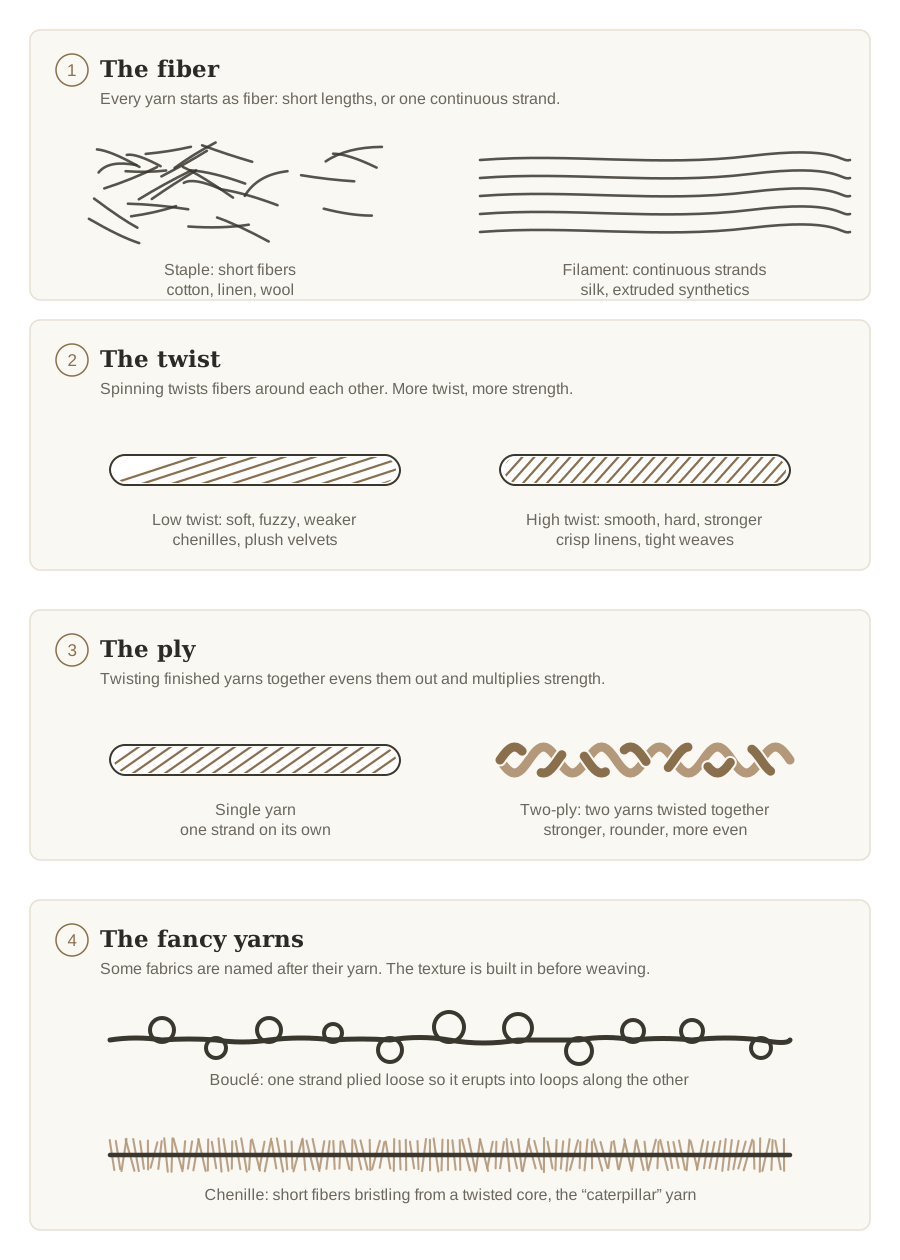
Fiber becomes yarn before it becomes fabric, and this middle step decides much of how a fabric feels and survives. It comes down to three moves.
Length. Cotton, linen and wool arrive as staple, short fibers a few centimeters long; silk and the synthetics can arrive as filament, a single unbroken strand. Filament yarns are smooth and strong because no fiber ends escape. Staple yarns are warmer and fuzzier for the opposite reason: millions of tiny ends at the surface, which is where softness comes from and, later, where pills come from.
Twist. Spinning twists fibers around each other until friction locks them into a strand, and the amount of twist is a dial. High twist gives a smooth, hard, strong yarn, the yarn of crisp linens and tight weaves. Low twist gives a plump, soft one, the yarn of plush velvets and cozy chenilles, and the first to shed and pill. At the yarn level, softness and durability are the same dial turned in opposite directions.
Ply. A single spun yarn is uneven, with thick and thin spots. Twist two or three finished yarns together and the irregularities cancel out: rounder, more even, and disproportionately stronger, the way a rope is stronger than its strands. Ply costs money, because it doubles the yarn in every meter, and it shows in fabrics that wear evenly for decades.
And some yarns are built for unique properties of their own, distinctive enough that famous fabrics carry the yarn's name rather than the weave's. Bouclé, originating from the French word for curled, plies two strands at deliberately different tensions so the loose one erupts into loops along the tight one, giving the woven fabric its nubby, sheep's-fleece surface. Chenille, from the French word for caterpillar, slices a woven cloth into strips and twists each one so that short fibers bristle from a central core, the furry yarn behind chenille fabric's deep, velvety hand. In both cases, the texture you feel on the sofa was built before the loom ever started.
Third decision: the construction
Yarn becomes cloth in one of two fundamentally different ways, woven or knitted, and a few fabrics skip yarn structure altogether. Each family behaves differently on a sofa.
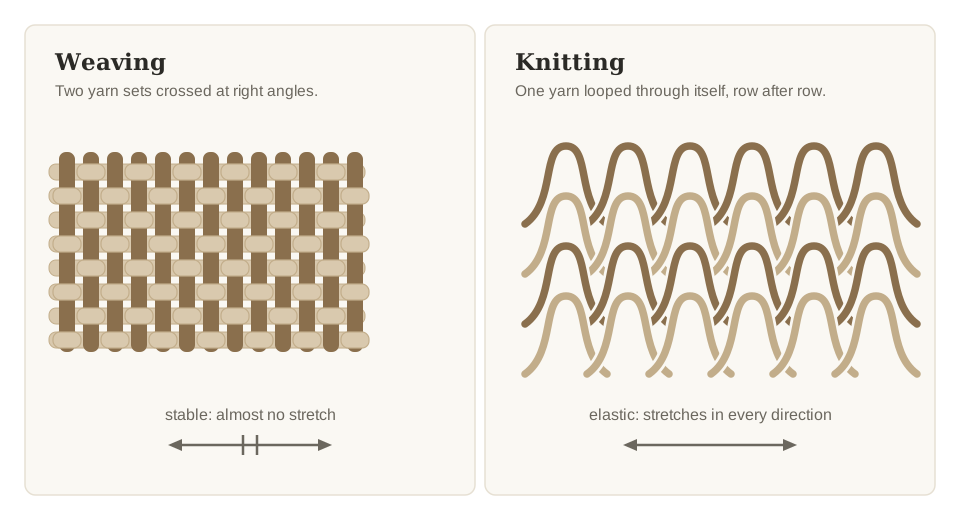
Weaving crosses two sets of yarn at right angles: the warp, held under tension along the loom, and the weft, carried across it. How they interlace defines the weave.
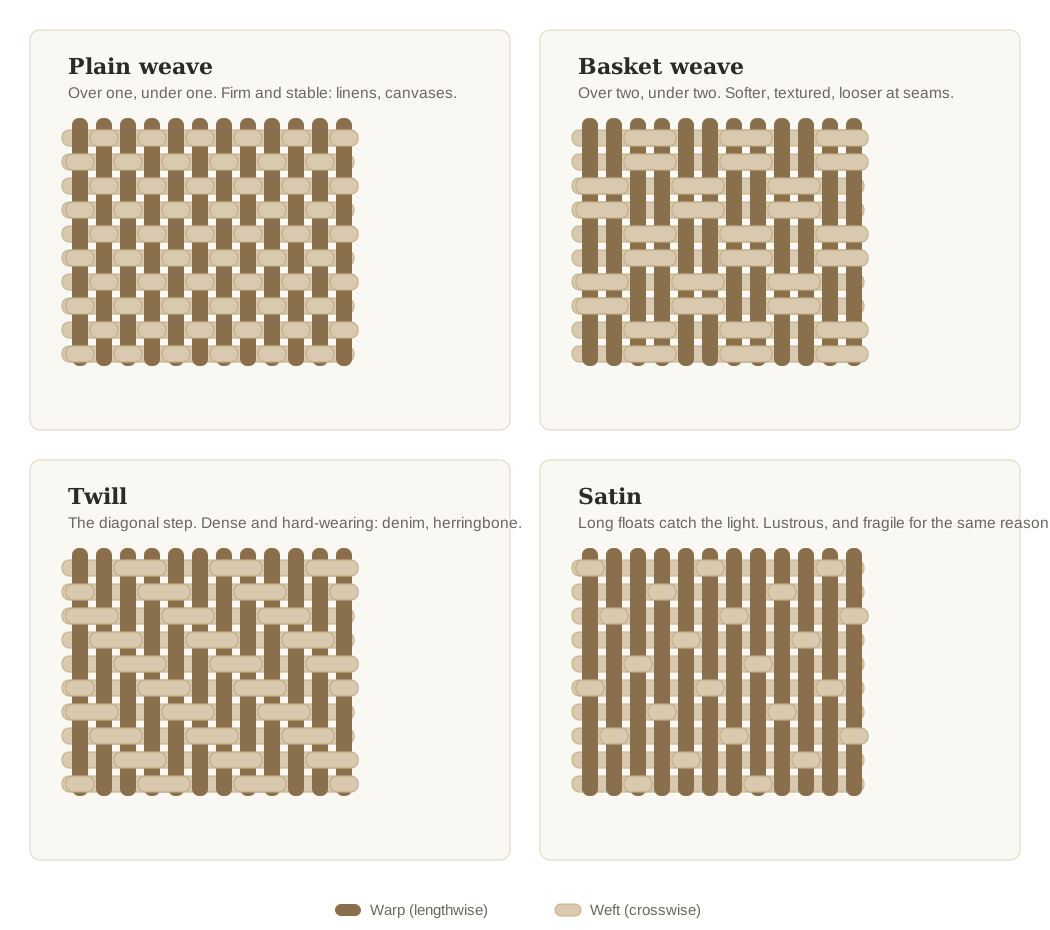
The simplest interlacing, over one, under one, is the plain weave, and it produces most linens and canvases: firm, stable, matte. Group the yarns two by two and you get the basket weave, softer and more textured, with a slightly looser structure that asks for care at the seams. Step the interlacing diagonally and you get twill, the structure of denim and herringbone, dense and hard-wearing because the yarns pack closer.
The fourth structure is satin, where yarns float across several neighbors before tying down, so the surface is almost uninterrupted yarn. The floats catch the light, which makes satin gleam, and they snag, which makes it fragile: pure satin belongs on cushions rather than seats. But the structure hides all over upholstery, above all inside damask, whose motif is nothing more than satin floats against a duller ground, pattern drawn in the direction of the light.
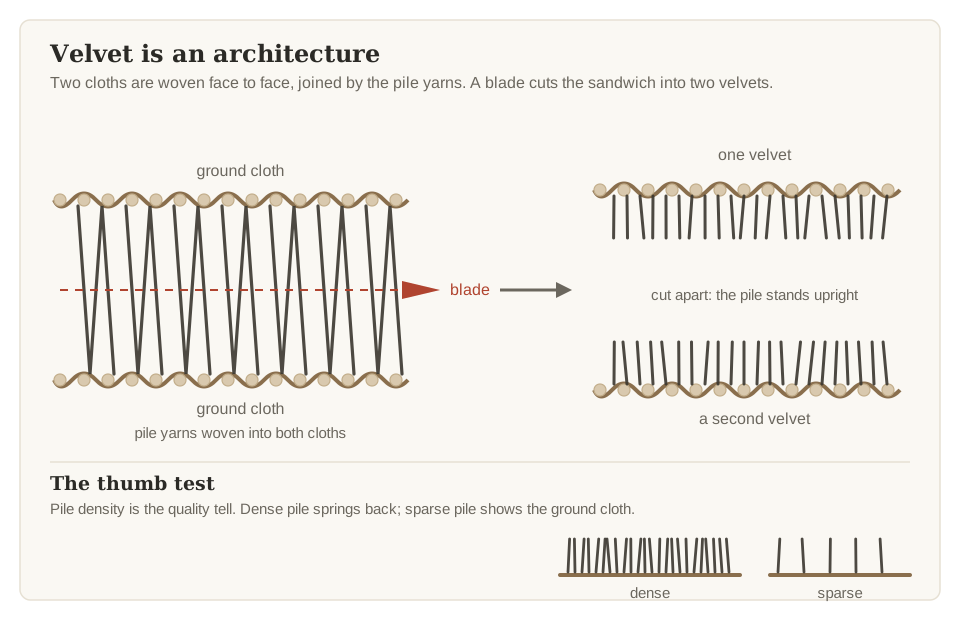
Velvet is not a fiber. It is an architecture. A velvet is any fabric with a third set of yarns standing upright from the base cloth, a mown lawn of fiber. The classic method weaves two cloths face to face, connected by the pile yarns, and a blade running between them cuts the sandwich into two velvets at once.
Patterned weaves: jacquard and dobby
Jacquard is not a pattern. It is a loom: a mechanism, invented in Lyon in 1804, that uses chains of punched cards to lift each warp thread independently. A jacquard fabric is any cloth whose pattern is woven in, thread by thread, rather than printed on. Damask is the reversible, single-color version, its motif appearing in contrasting sheen. Brocade adds supplementary yarns for a raised, embellished figure. Tapestry weaves are the heavy, multicolored jacquards. All of them run slower on the loom than plain cloth, and loom time is money. Smaller geometric patterns can be woven on a simpler dobby loom, which is why a small diamond costs less than a large medallion.
Knits
Knitting abandons the crossed grid entirely: the fabric is a chain of interlocking loops, which is why every knit stretches. In upholstery, knits earn their place on curved, organic shells, the kind of sculptural seat where a woven fabric would pucker and fight the form. The trade-off is structure: a knit has less of it, and a loosely knitted fabric will bag on a flat cushion the way a sweater bags at the elbow.
Beyond the loom
A few upholstery surfaces are not really woven or knitted in any traditional sense. Microsuedes are extremely fine polyester filaments formed into a dense sheet and sanded until the surface mimics suede. Flocked fabrics plant short fibers electrostatically onto an adhesive-coated base, velvet's industrial cousin. Their appeal is practical rather than romantic: a tight, uniform surface with no loops to snag and no weave to open, which explains their popularity in households with children and their dominance in the performance-fabric aisle.
The families, briefly
| Fabric | What it really is | Best at | Honest weakness |
|---|---|---|---|
| Plain / basket weave | Simplest interlacing | Texture, linen character | Loose versions slip at seams |
| Twill / herringbone | Diagonal interlacing | Density, durability | Conservative look |
| Velvet | Cut pile standing from ground cloth | Depth, light, touch | Pressure marks; quality varies wildly |
| Chenille | Woven from caterpillar pile yarn | Softness, warmth | Pile pulls and pills under friction |
| Bouclé | Woven from looped yarn | Sculptural texture | Loops snag; cats agree |
| Jacquard | Loom-woven pattern | Permanent, reversible-depth motifs | Loom time, price; long floats can snag |
| Microsuede | Sanded fine polyester | Families, easy cleaning | Character |
The specifications
A fabric cannot be interviewed, but it can be measured. Every fabric intended for upholstery carries a set of specifications and standardized test results that, read together, predict how it will perform: its weight, how it survives friction and sunlight, whether it pills, how it takes a spill. The results fit on half a page, and that half page is the closest thing the industry has to an honesty policy. Any serious maker can produce it for every fabric in the line; if they cannot, that silence is itself a specification. Here is what each number means, and what it quietly does not.
Weight, and what it does not mean
Spec sheets state weight in grams per square meter. Upholstery fabrics generally run from roughly 250 to more than 600. Weight is an honest cost driver, since a heavier cloth simply contains more material, and very light fabrics rarely survive tailored upholstery. But the most common mistake in fabric buying is reading weight as durability. A 300-gram mohair velvet will outlive a 600-gram loosely woven chenille by decades. Durability lives in the fiber and the tightness of the construction, not on the scale. That is what the tests are for.
Abrasion resistance
The headline number, and it comes in two incompatible currencies. In Europe, the Martindale test rubs the fabric in a shifting figure-eight against wool until threads break, and reports the cycles survived. As a working guide: under 10,000 is decorative only; 15,000 to 25,000 covers general domestic use; 25,000 to 40,000 is heavy domestic, the sensible floor for a family's everyday sofa; 40,000 and above is contract grade, specified for hotels and restaurants. In North America, the Wyzenbeek test rubs cotton duck back and forth and counts double rubs, with 15,000 as the contract benchmark and 30,000 and up as heavy duty. The two machines abrade differently and their numbers do not convert; compare Martindale to Martindale.
Treat the number honestly in both directions. Beyond roughly 50,000 cycles the differences stop mattering in a home. And a towering abrasion score guarantees nothing about pilling, fading or stains; it measures one failure mode out of several.
Pilling
Pilling is what happens when a fabric grows a beard. Every staple yarn carries millions of loose fiber ends at its surface; friction teases them out and rubs them into tiny tangled balls that hang on. The test reproduces this by rubbing the fabric against itself under controlled pressure and grading the result from 1 to 5, where 5 means no pills at all. Look for 4 or better on anything sat on daily.
It is the characteristic vice of exactly the fabrics people buy for softness, chenilles, brushed weaves and plush low-twist velvets, because the loose surface fibers that feel soft are the same fibers that pill. And strong synthetic blends can look worse than weak natural ones: wool pills break off and disappear, while polyester fibers are so strong that the pill stays anchored indefinitely. A fabric can post a heroic abrasion score and still look tired in a year, which is why the two numbers must be read together. A pass with a fabric shaver, harmless and effective, is a normal part of a chenille's life rather than a defect.
Colorfastness
Color can fail three ways: it fades, it rubs off, or it bleeds. Each has its own test.
To light. Dyes are molecules, and ultraviolet light breaks them apart one bond at a time. Lightfastness is graded against the blue wool scale, 1 to 8, where each step roughly doubles the exposure the color survives. Grade 4 is the acceptable floor for interiors; near a sunny window, insist on 5 or 6. Viscose and silk fade first, and the difference between grade 3 and grade 6 is the difference between two summers and twenty. In a tropical light like Panama's, this is not the footnote spec. It is the second number to check.
To rubbing. Called crocking, tested dry and wet and graded 1 to 5: does color transfer off the surface under friction? It matters in both directions, a poorly fixed dark velvet shadowing light clothing, and dark denim staining pale upholstery. Wet scores always run lower than dry.
To water and perspiration. Separate tests wet the fabric with water and with a synthetic perspiration solution, then grade whether the color shifts or bleeds. Skin is mildly acidic and slightly oily, and armrests and headrests receive it daily; a fabric that scores poorly here develops discolored patches exactly where hands and heads rest, long before the weave shows wear.
Cleanability, water and oils
Durability against friction is one thing; durability against life is another. Three specifications describe it.
The cleaning code tells you what you may do when something spills: W means water-based cleaners are safe, S solvents only, WS either, X vacuum only. It quietly ranks real-world durability: an S-coded fabric on a family sofa turns every coffee incident into a dry-cleaning appointment. For furniture that will be lived on, W or WS with removable covers does more for the fabric's tenth year than any performance number.
Water repellency grades how the surface receives liquid: on a high score it beads and rolls, buying the seconds you need to reach for a cloth; on a low one the fabric drinks the spill and the question becomes staining, not wiping.
Oil repellency is graded 0 to 8 with drops of test oils. Oils are the slow enemy of upholstery: cooking vapors, hand cream and above all body oils build invisibly on armrests and headrests into the dark patina no vacuum removes. Grade 4 or better resists it.
Seam slippage
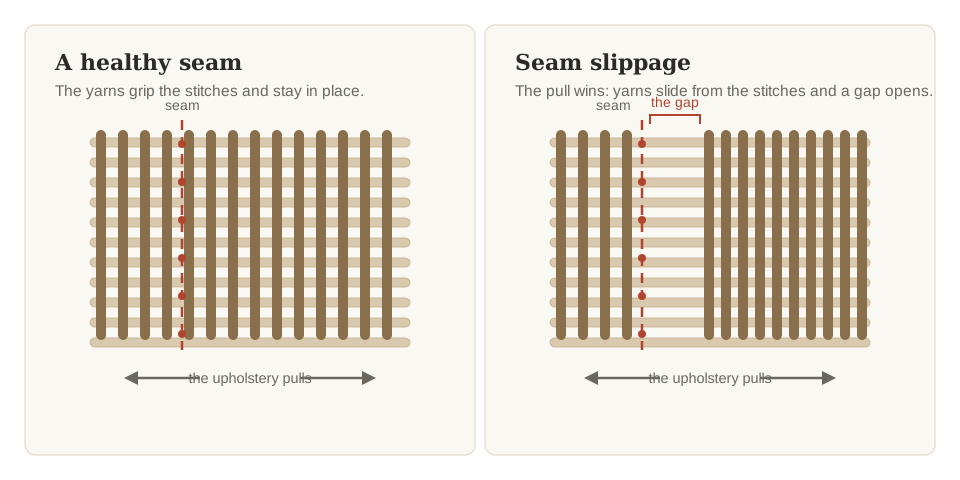
On a sofa, fabric rarely wears out in the middle of a cushion. It fails at the seams, where the cloth is sewn and pulled tight. Seam slippage is what happens when the pull wins: the yarns nearest the stitches slide away from them, and a thin gap opens beside the seam, like a run in a stocking. Nothing is torn; the yarns have simply moved. Labs test for it by sewing a standard seam, pulling on it with a fixed force, and measuring how far the yarns shift. Open, loose weaves and slick yarns slip the most. The rule of thumb: the tighter the fabric is stretched on the furniture, the more this number matters. If you love an open weave that scores poorly, use it on loose covers and cushions, not pulled drum-tight over a seat.
For public spaces, flammability standards such as BS 5852 or California TB 117 enter the specification. Residential buyers rarely need to think about them; wool passes on its natural chemistry, most synthetics need treatment.
Five questions to ask before you buy
- Can you show me the fabric's test results? The answer sorts vendors instantly. Any serious maker has the Martindale score, the pilling grade and the colorfastness results for every fabric in the line. If they cannot produce them, expect decorative durability at best, and pay a decorative price.
- What is the composition, exactly? Not "velvet" or "bouclé," which name a construction, but the fiber percentages behind it. The same weave in polyester and in mohair are different objects at different prices for different lives.
- Will it survive my room? Match the numbers to your reality: 25,000 Martindale cycles and pilling of 4 or better for an everyday sofa, lightfastness of 5 or better near strong sun, and honest colorfastness to rubbing if the household wears dark jeans.
- How is it cleaned, and can the covers come off? A W or WS cleaning code and removable covers will do more for the fabric's tenth year than any single performance number.
- Where is it stressed? Tight upholstery pulls at seams; loose covers forgive. For open weaves and bouclés, ask about seam slippage, and match the fabric to the construction of the piece, not just to the swatch in your hand.
Fabric is the material you will actually touch every day. The frame carries the sofa, but the yarn is what your hand remembers. Read it closely, and choose it wisely.
Updated September 18, 2026
About the author
I'm Gabriel, cofounder of Mansa Furniture. I studied industrial engineering, built a career as a software engineer, and have liked woodworking since I was a teenager. I didn't realize all three had something in common, my real passion: functional design, building things that help people do things easier and live better. I bring an engineer's habits to furniture, paying close attention to materials and processes, always asking what actually adds value to a piece of furniture.
Frequently asked questions
Is polyester upholstery fabric good quality?
Modern polyester is far better than its reputation: strong, stable, colorfast, and the backbone of most performance fabrics. What it lacks is the hand, the temperature and the aging of natural fiber. It develops no patina; it holds its year-one face until pilling or crushed pile catches up with it, and then it looks worn rather than lived-in.
Why is linen so much more expensive than polyester?
Linen starts with scarcity: flax thrives only in a narrow coastal band through Normandy, Belgium and the Netherlands, and extracting the fiber from the stalk is laborious. Polyester is extruded as continuous filament from petroleum at industrial scale, with no harvest and no spinning of short fibers, which is why it anchors the low end of the price range.
What is a good Martindale rub count for a sofa?
For an everyday family sofa, look for at least 25,000 Martindale cycles, the threshold for heavy domestic use. Anything above 40,000 is commercial grade, specified for hotels and restaurants, and beyond roughly 50,000 cycles the differences stop mattering in a home. Under 15,000 is best kept for decorative pieces and cushions.
What is the difference between Martindale and Wyzenbeek?
They are the European and North American abrasion tests, and their numbers are not comparable. Martindale rubs the fabric in a shifting figure-eight against wool and reports cycles; Wyzenbeek rubs cotton duck back and forth and counts double rubs. The machines abrade differently and there is no reliable conversion, so always compare Martindale to Martindale.
What is the most durable fabric for a sofa?
Mohair velvet is quietly one of the most durable upholstery fabrics ever made, the reason old theaters chose it, with wool and tight twill weaves close behind. More useful than any single fiber, though, is the spec sheet: Look for 25,000 Martindale cycles or more, a pilling grade of 4 or better, and honest colorfastness results.
Is bouclé fabric durable?
Bouclé is woven from a looped yarn, and the loops that give it its sculptural texture are also its weakness: they snag on claws, buckles and rough edges, and open bouclé weaves can slip at the seams. It suits loose covers and low-tension upholstery better than fabric stretched drum-tight over a seat frame.
Do velvet sofas wear well?
It depends entirely on the pile. Velvet is a construction, not a fiber: mohair and good polyester velvets are extremely hardy, cotton velvet is moderate, and silk velvet is delicate. Check pile density by pressing a thumb into it, a dense velvet springs back while a sparse one shows the ground cloth, a good dense velvet will be more durable. Expect pressure marks as part of the material's character.
What does the pilling grade on a fabric mean?
rubbing the fabric against itself under controlled pressure; a 5 means the surface stays completely free of those small tangled fiber balls, and 4 or better is the target for daily-use furniture. Soft fabrics like chenilles and brushed weaves are the most prone, and a pass with a fabric shaver is a normal part of their care, not a sign of a defect.
What is a jacquard fabric?
A jacquard is any fabric whose pattern is woven in, thread by thread, rather than printed on, made on a loom that lifts each warp thread independently. Damask, brocade and tapestry weaves are all jacquards. They run slower on the loom than plain cloth, which is part of why woven-pattern fabrics cost more.
What do the W, S, WS and X cleaning codes mean?
They tell you what is safe when something spills: W means water-based cleaners, S means solvents only, WS means either, and X means vacuum only. For furniture that will be lived on, a W or WS code with removable covers does more for the fabric's long-term life than almost any performance number.
Comments (0)
No comments yet. Be the first to write one.


